Introduction
As a creative professional, you’ve poured your heart into teaching and mentoring through online courses, coaching websites, and vibrant membership communities. Yet, every once in a while, you might encounter the dreaded bad review. Sound familiar? Don’t worry; you’re not alone.
- Pain Point: That negative comment can linger in your mind, clouding your judgment and shaking your confidence.
- Challenge: How do you react constructively to criticism instead of responding in the heat of the moment?
- Problem: Managing and burying negative reviews without them affecting your reputation or your growth.
This lesson will guide you through understanding and handling negative reviews like a pro, turning potential setbacks into stepping stones. Keep reading to discover strategies that will transform you into a review-handling champ, ready to sidestep negativity and shine with stellar feedback.
Video Lesson – Handling Bad Reviews – The Video Version
What It Is
Receiving a negative review can feel like a personal attack, especially when you’ve dedicated time and passion to your creative teaching business. But in reality, a bad review is a chance for feedback. It’s an opportunity to learn, improve, and sometimes even win over a lifelong customer. Let’s delve into what handling a bad review involves and how you can navigate this process smoothly.
First, it’s vital to approach criticism with a level head. Initial reactions can be emotional, but responding with composure sets the stage for a positive resolution. Investigating the review itself will help distinguish valid criticism from random ire. You need to know who wrote the review, their engagement level with your offerings, and what might have gone wrong.
Furthermore, crafting a thoughtful response can help de-escalate the situation. Whether it’s a simple “Thank you for your feedback” or a more complex resolution, engaging with the reviewer privately can often resolve issues amicably. If handled well, you may even transform detractors into advocates who appreciate your commitment to quality service.
Why Handling It
Handling bad reviews with grace offers numerous benefits. Here’s why learning this skill is essential for your creative business:
- Business Growth: Constructive criticism helps you refine your processes, enhancing overall product and service quality.
- Reputation Management: Effective review management maintains your public image and attracts more students.
- Customer Relationships: Addressing concerns personally helps build trust and often results in long-term loyal clients.
Use Cases:
- Engaging with negative feedback can highlight areas needing improvement in an online fashion course.
- A writing coach might use reviews to refine the clarity of instructions in their e-books.
- Audio-visual teachers can gain insights about platform functionality from student feedback.
- Performance arts instructors might receive comments to enhance workshop experiences.
- Visual design educators can use reviews to tweak course content for better engagement.

How to Lesson
When it comes to addressing negative reviews, a strategic approach is your best ally. Here’s how to master the process:
Step 1: Don’t React Emotionally
As soon as you receive a bad review, step back. Don’t let your emotions dictate your response. Take time to cool off before addressing the review. Impulse responses can escalate conflicts.
Step 2: Investigate Thoroughly
Determine who the reviewer is and what their complaints are based on. It’s crucial to understand if they’re an active participant or had limited interaction with your services. Gather facts and connect the dots to build a clear picture.
Step 3: Develop a Response Strategy
With data in hand, strategize your response. Reach out privately to the reviewer, acknowledge their experience, and offer a resolution such as a refund, extension, or additional resources. Aim for a constructive and non-confrontational dialog.
Step 4: Resolve Privately, Comment Publicly
Once resolved, comment publicly to acknowledge the situation without detailing the issue. A brief, polite “Thank you for bringing this to our attention” demonstrates willingness to address concerns.
Step 5: Encourage Positive Reviews
Balance the critical feedback with fresh, positive testimonials. Encourage satisfied students to share their experiences, thereby diluting the impact of negative comments.
By following these steps, you transform critique into a roadmap for excellence, fortifying your business against future hiccups.

Get step-by-step coaching and resources to grow your dream training business.

Real World Example
Let’s illustrate these points with the story of an online crafting teacher, Jenny, facing a bad review from a student struggling with a complex seashell project.
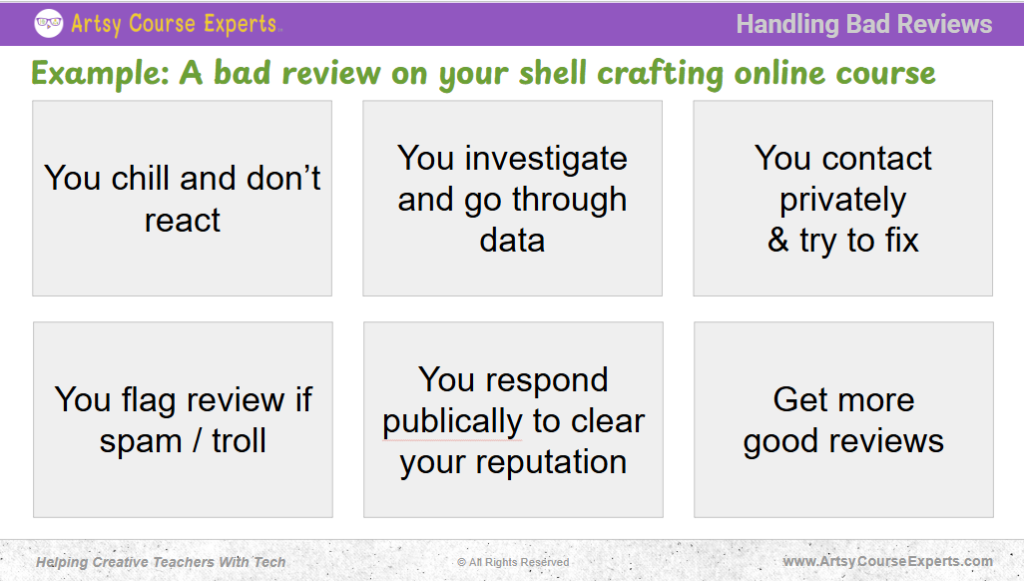
Chill and Gather Data
Jenny received a negative review but resisted the urge to immediately respond. Instead, she took a moment to relax and later investigated what went wrong.
Investigate and Understand
Jenny determined that the issue was an overly ambitious project choice. By reaching out to the reviewer, she discovered the student needed guidance to choose the appropriate materials.
Thoughtful Response
Jenny contacted the student privately, apologized for their experience, and offered a free eBook with simpler project ideas. This personal touch showed commitment to student satisfaction.
Public Acknowledgement
After resolving the complaint, Jenny added a brief public comment, thanking the student for their feedback and hinting at improvements being made based on the review.
Burying Negativity with Positivity
Jenny then encouraged other students to share their positive experiences, which helped bury the negative review beneath a genuine flood of positive feedback.
Applying Jenny’s story can enable other creative teachers facing similar scenarios to handle criticism with finesse, transforming challenges into impactful opportunities.
Frequently Asked Questions
Q: How should I react to a bad review?
A: Stay calm, analyze the situation, and respond thoughtfully after taking some time to process.
Q: Can I ignore negative reviews?
A: Ideally, no. Ignoring valid criticism might worsen your relationship with clients and harm your reputation. Address concerns constructively.
Q: What if I can’t resolve the issue privately?
A: Focus on a polite public acknowledgment to show your willingness to engage. Transparency can mitigate negative fallout.
Q: How do I prevent more negative reviews?
A: Implement feedback to improve services and maintain regular communication with students to address issues before they escalate.
Q5: Do positive reviews really help outweigh negative ones?
A: Absolutely! Positive reviews enhance credibility and can minimize the impact of occasional negative feedback.
Summary
Handling bad reviews may initially seem daunting, but with a good strategy, you can turn them into opportunities for growth. Here’s how you can master it:
- Take time to cool off before responding.
- Investigate thoroughly and gather facts.
- Reach out to the reviewer privately with a solution.
- Publicly acknowledge the issue without escalating.
- Encourage happy students to leave positive reviews.
Remember, you’re now equipped to manage these situations like a seasoned pro. You’re more informed, prepared, and confident in your ability to handle the unexpected turns in your teaching journey. Keep learning, adapting, and watch your creative company grow like crazy!